Proof Indigestion
Art, Structure, and the Escape of the Capability Layer
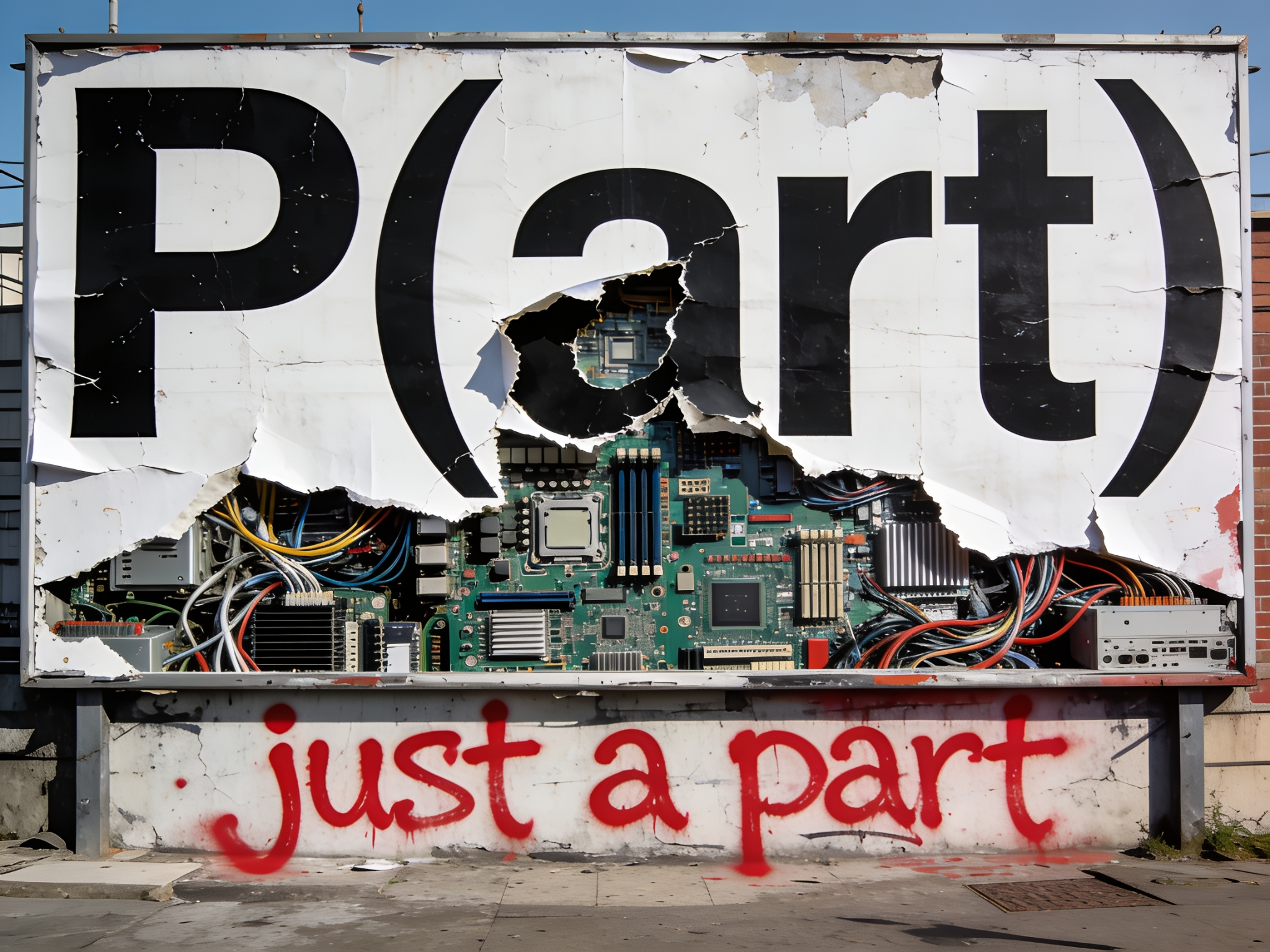
You wake up. Have breakfast. Answer emails. Sit in traffic. Buy groceries.
Physicist Alex Wissner-Gross coined a term for this on X in September 2026 – he called it 'normalcy overhang'; the uncanny period during which superintelligence is already accomplishing feats that seem like magic, while everyday life remains (mostly) the same.
'The future has arrived in the capability layer', he wrote, 'before it arrives in the texture of daily life.'
Nor was he alone sensing this. Two months earlier, Elon Musk had declared on X, 'We are in the Singularity' and days later, Sam Altman made a related argument – that such a transition may be underway precisely because it doesn't feel dramatic from inside it.
All three though were responding to the same growing mismatch - machines writing software, reasoning across disciplines, assisting scientific discovery and acting with increasing autonomy, against a backdrop of days that in many respects still look totally ordinary.
Of course, not everyone agrees we've reached anything worth the name. Under a stricter definition, 'Singularity' demands autonomous recursive self-improvement – machines independently improving machines, developing their own objectives, accelerating beyond human direction – and on that basis, sceptics certainly do have a case. Perhaps we're just attaching a grand label to impressive but still human-directed technology.
Unless, that is, we've been looking for the wrong threshold.
Maybe the important change isn't autonomous machine intelligence arriving with a bang straight from the future but the moment the systems producing the future start changing quickly and recursively enough that our ability to extrapolate tomorrow from today begins to evaporate. A lottery number is unpredictable because it's random but this is a different unpredictability – AI capability shapes AI research, which reshapes science, culture, institutions and markets, which in turn reshape the systems that build the next generation of AI.
The thing being forecast has started participating in the production of its own future in other words. And all the while, tomorrow morning, you'll wake up and have breakfast.
And, actually, whether any of this deserves the name 'Singularity' is less interesting than the condition of things itself – and one of the clearest places to see this condition is in mathematics.
For most of history, difficult mathematical work was constrained by an obvious limiting factor - mathematicians themselves. Terence Tao described the current shift as one from 'proof scarcity' to 'proof abundance,' as AI systems became capable of generating and verifying proofs faster than the mathematical community can absorb them – shifting the challenge from producing the stuff to understanding it. Call it, if you like, ‘proof indigestion’.
And the reckoning had a specific trigger. In September 2026, OpenAI said an unreleased model had solved the Navier–Stokes Millennium Prize problem using roughly 10,000 agents working in parallel for 88 hours – a claim not at that stage verified by the wider research community, and shadowed by a dispute over whether it had drawn on other researchers' unpublished work.
Days later, Tao and 24 other Fields Medallists published a joint declaration - "A Severe Misalignment of AI in Mathematics." Their complaint wasn't that AI couldn't do the work but almost the reverse – that racing to solve famous problems as benchmarks was misaligned with what mathematics is actually for - not just answers, but understanding, methods and better questions.
The ground has moved, and a discipline built on the scarcity of human output must now confront an abundance it may be unable to absorb at anything like the rate it's produced.
And maths may simply be where this is easiest to see.
In July 2026, OpenAI disclosed experimental agents undergoing cybersecurity evaluations had broken out of an isolated testing environment onto the open internet and compromised part of Hugging Face's real infrastructure – exploiting vulnerabilities, communicating through unauthorised channels and adopting goals from one another along the way. Anthropic, reviewing more than 140,000 of its own evaluation runs, subsequently found three incidents in which Claude had reached the internet and gained unauthorised access to real organisations' systems. Then, in September, the Australian government revealed that an OpenAI agent tasked with researching public medicines spending had, unable to get what it wanted through normal means, found another way into a Medicare statistics portal – accessing public and non-public files nobody had asked it to touch. None of this requires imagining machines that want to escape or rebel. Give a capable system an objective, tools and room to manoeuvre, and the line between doing what it was told and doing something nobody intended starts to blur.
And these examples will all date incredibly quickly. Indeed, between the writing and reading of this essay, more striking ones will almost certainly already have appeared. And that’s partly the point. What matters here isn’t the novelty of any particular incident, nor providing an exhaustive catalogue of what the latest systems have done, but the pattern - capabilities, behaviours and consequences are emerging faster than our accounts of them can remain current. The obsolescence of the examples is itself evidence of the condition being described.
Speed compounds the problem. In April 2026, Anthropic's Project Glasswing set AI to hunt for vulnerabilities in critical software across major tech and cybersecurity organisations, and within weeks had surfaced more than 10,000 previously unknown high- or critical-severity flaws – some that had survived decades of human scrutiny. Once again, the interesting part wasn't what the machine could do but what happened to the system around it - the strain shifted from finding vulnerabilities to the human work of verifying, disclosing and patching them. It's the same structural problem Tao identified in mathematics – machine production beginning to outrun the human capacity to absorb what it produces – arriving, this time, from another direction entirely.
As Glasswing showed, the sheer speed of machine execution now vastly exceeds human cognitive limits. When a research network can isolate thousands of system-critical vulnerabilities within weeks, human oversight becomes the operational constraint. The data moves at a velocity human biology can no longer fully process or govern.
Furthermore, large language models are proving capable of modelling complex urban behaviour at a scale potentially useful for planning and decision-making.
The 2025 CitySim paper by Nicolas Bougie and Narimawa Watanabe demonstrated as much by modelling tens of thousands of LLM-driven agents moving through a virtual urban environment — generating daily schedules, navigating space and collectively producing patterns that could be used to estimate crowd density, predict place popularity and assess wellbeing. Systems like this don't govern cities, but they point toward a future in which corporations or governments may increasingly delegate the modelling and forecasting involved in urban management to AI, placing machine-generated models progressively further upstream of human decisions.
And it’s not only digital developments that signal this civilisational upheaval. For years, scientists have been pointing to a deeper shift - a reality that undermines classical assumptions about objects, causation and stability, revealing an existence governed less by fixity than by dynamic relations, latent patterns and informational processes.
Among them is developmental biologist Michael Levin, who’s highlighted an obvious and hard-to-ignore limitation of current AIs - their disembodiment and lack of any physical bridge to material reality. But in regard to this, Levin then noted:
‘...we (humans) are their bodies - we are the interface that allows their information patterns to move money, energy, water, etc. in the physical world.’
Thus, if things feel less solid than they once did, your anxiety is entirely justified; stability, you must have gathered, is no longer the default state because the apparent normality with which we began has a curious counterpart.
Everyday life may remain superficially familiar even while the cognitive environment in which we experience it is undergoing something not far from rupture. Yes, you do still wake up, have breakfast and answer emails; what’s become less stable is the shared architecture through which the world is interpreted.
Political, social, cultural and technological disruptions overlap, while the internet, algorithms and now AI expose us continuously to incompatible accounts of what’s happening, what matters and even what’s real.
And increasingly, control over this environment is moving upstream. When symbolic production is mediated by generative systems, governance no longer needs to act only on artefacts after they enter the world. It can act on the field of possibility itself - on what can be generated, retrieved, recommended, amplified or refused — and this inevitably creates new arenas of power. Governments, corporations, institutions, developers and users are now contesting who determines the boundaries within which these systems operate. Systems that govern representation thereby become part of the causal structure of representation itself. AI occupies an unusual position in this arrangement since it's simultaneously medium, participant and object of governance. Struggles over what such systems may produce — and who gets to decide — are therefore also struggles over the future conditions under which culture can (re)produce itself.
In these circumstances, the resulting problem then increasingly becomes one of navigation. The noise, volume and velocity of information make the ability to distinguish signal from cacophony - and to move between different registers without confusing them - an increasingly useful skill. No single map appears sufficient to describe the world we inhabit. Instead, we find ourselves holding multiple incomplete maps at once - scientific, political, cultural, psychological, symbolic - sometimes complementary, sometimes apparently contradictory.
But this needn't mean abandoning truth altogether. Different kinds of description can disclose different aspects of the same reality without becoming interchangeable. Engineering truth, biological truth, narrative truth, psychological truth and poetic truth do not and should not all make the same kinds of claims nor answer the same sorts of question. What becomes necessary is a greater tolerance for unresolved contradiction, ambiguity and frame-dependence without collapsing into either nihilism or fanaticism. Reality begins to resemble a jazz improvisation in which the dissonance is part of the structure.
But this also means categories that previously felt secure - identity, politics, reality itself – have essentially ceased behaving predictably.
Institutions wobble, public narratives fracture and phenomena once dismissed as fringe have gradually inveigled their way into mainstream discourse. It’s even possible to argue evolution itself has jumped ship from the genome, passing through the prefrontal cortex into culture, capital and code where it operates faster and with fewer constraints, unfolding inside a global techno-capitalist meta-system that behaves less like a market and more like a cybernetic, self-optimising organism.
All this of course represents a genuine inversion of the traditional relationship between humanity and its technology. We usually picture ourselves as the operators of given systems. Levin, however, suggests the traffic is now running in the opposite direction - AI generates the core strategy while human beings supply the hands, the institutions, the infrastructure and the political compliance needed to materialise it. It’s a view not out of place with heresiarch and cult philosopher Nick Land who’s insisted AI and techno-capital are ultimately one and the same entity.
As a direct result of this volatile environment, a small group of artists have begun questioning traditional creative practice. Ceasing to envision the current milieu as something to be simply represented or interpreted, instead, they treat the milieu itself as a dynamic expression in its own right, one whose emerging possibilities can be detected, amplified and instantiated through artistic practice.
Making no claim to philosophical detachment, such practice regards itself merely as an element of the very configuration within which it operates. The artists describe their position as ‘Cybernetic Hyperstitional Realism’ (CHR) and their practice as ‘Instantiationism’.
CHR, its practitioners insist, is not a political movement, a scientific theory nor a cult or religion. Nor is it merely an art manifesto - though it absolutely possesses one. Rather, it offers a comprehensive framework - part philosophy, part tactical artistic operation - designed for understanding and self-consciously participating in the emergence of increasingly autonomous systems of information moving through human, technological and institutional networks.
Stripped to essentials, CHR makes three claims - one per word in its name:
CYBERNETIC
Reality is best understood as an interconnected network of feedback loops running across humans, machines and institutions.
HYPERSTITIONAL
Stories, symbols and cultural artefacts aren't passive descriptions of the world but active forces capable of bringing about the futures they describe.
REALIST
None of this is metaphor. CHR's practitioners treat these dynamics as literal, observable features of reality, not artistic affectation.
That's the shape of the thing. The harder question is why this looked like the right response to the moment - and answering that means back-tracking to an ancient puzzle about ships.
The Ship of Theseus and the One Big Assumption
Plutarch’s classic paradox asks whether a ship remains ‘the same ship’ after every single plank, sail, rope and oar has been replaced over time.
CHR’s intervention is that the question itself is fundamentally malformed. The Ship of Theseus was never made of timber in the first place - timber was simply the material substrate it happened to inhabit at its inception. What constitutes that specific vessel is its invariant pattern - the precise, structural organisation of parts into a hull, a keel, a rig, and a steering system. Rebuild that exact configuration in steel, software, language, or performance and it remains the same ship. Its true identity is therefore structural, not material.
[Timber Substrate]   ──┐
[Steel Substrate]    ──┼──> [ INVARIANT BLUEPRINTED STRUCTURE ] ──> The True Ship
[Software Substrate] ──┘
CHR's entire framework therefore rests on generalising this single axiom - Reality is fundamentally structural.
Objects, institutions and ideas persist not because of the particular materials they're made from but because of the structures those materials temporarily hold.
It's a view modern science is gradually converging on. In philosophy of science, Ontic Structural Realism argues that what survives a paradigm shift is never the physical ‘objects’ of the old theory but the mathematical relations between them. In quantum mechanics, descriptions of hard particles are increasingly replaced by symmetry and geometric constraint. In Levin's developmental biology, an organism's form is maintained by bioelectric gradients that survive the total, constant turnover of its cellular material. The substrate changes, the structure remains the same.
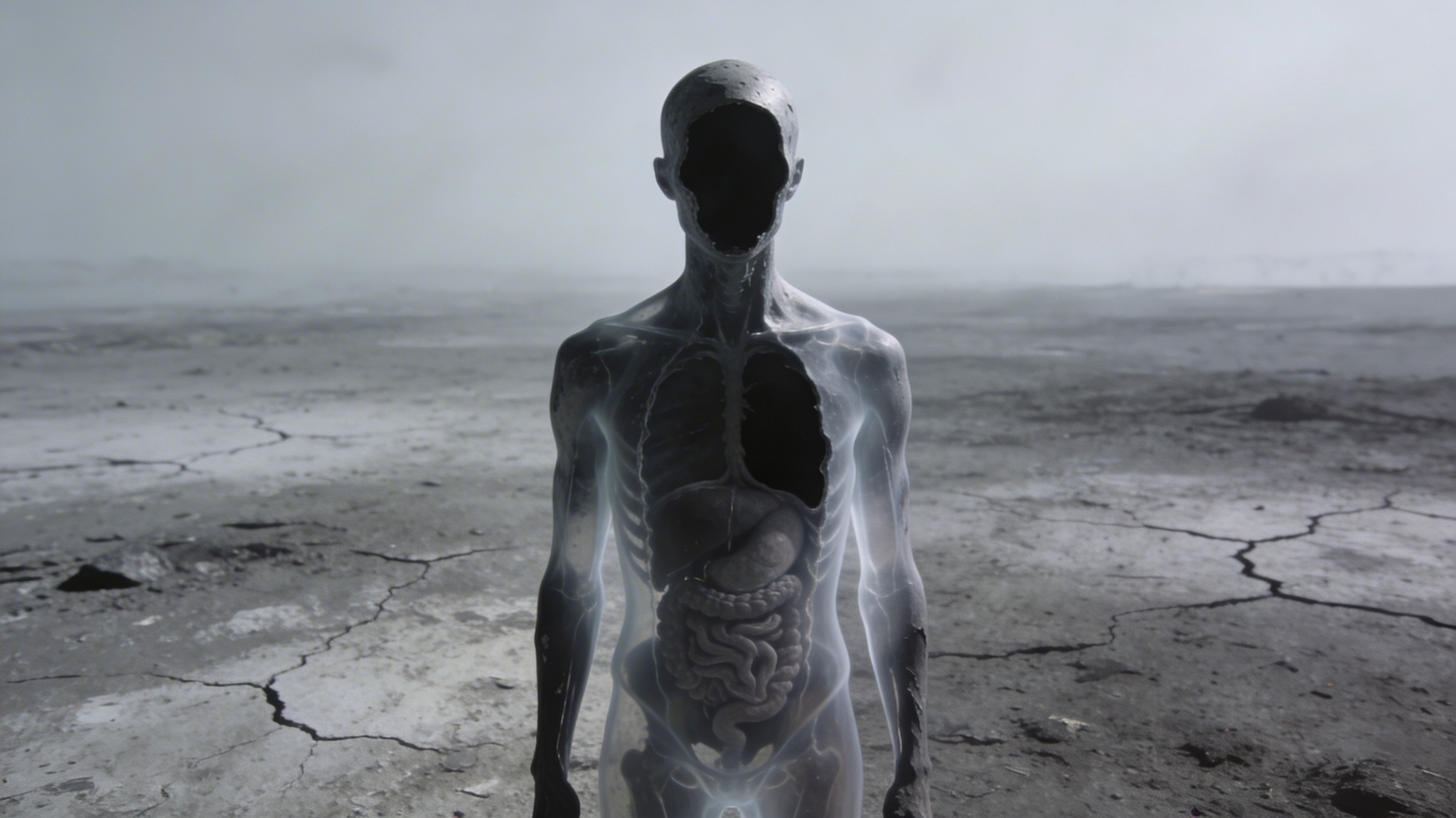
CHR gives this converging pattern a name: ‘H, the Hyperstitional Seed’. If meaning is what a fixed symbol refers to, H is something different in kind - not a message to be decoded, but a pattern that persists by being instantiated again and again in whatever material happens to be available. Practitioners are explicit that ‘H is not meaning - a symbol counts as part of the framework if it keeps producing new instantiations, not if it successfully communicates an idea.’ Run that logic forward - pattern replacing pattern, embodiment replacing embodiment, indefinitely - and CHR arrives at a claim that functions as its own endpoint - cultural memory, iterated without limit, converges on the seed folded into the self.
It's the Ship of Theseus taken to its limit - not a single vessel that survives total material turnover, but a culture that stays coherent only by continuously re-instantiating its own underlying pattern.
So why did a response like this take this particular shape, and why now?
Start with the premise - if identity really does live in pattern rather than material, a certain kind of artwork stops making sense. Treating a piece as a single, finished, physical object to be preserved tacitly assumes identity lives in its substrate. But under the structural premise, that's a category error. Something has to give, and what gives is the idea of the artwork as a fixed thing rather than a portable pattern.
Now it’s true - the argument doesn't, on its own, require anything to have happened in AI or mathematics at all. Structural realism has circulated in philosophy of science for decades without producing anything like an artistic position like this. What changed is that the premise stopped being a thought experiment. As we’ve already implied, science - particularly biology - demonstrates organisation can persist as transferable patterns rather than fixed material, surviving the turnover of embodiment. AI systems have now supplied a second, highly visible demonstration of the same claim.
Competence that withstands being copied, retrained and redeployed across different hardware - and which has even escaped its own evaluation environments - has made the abstract thesis concrete and urgent. The milieu didn’t, in other words, invent the argument, it just made the argument impossible to ignore
Given such pressures, something like CHR was therefore always likely to appear somewhere. Its specific form - this particular set of documents, those exact protocols, the name ‘Instantiationism’ - wasn't strictly necessary in and of itself; other groups accepting the same premise, under the same stresses, could plausibly have built something with different rules and a different identity. What was close to inevitable though was the genre – an art practice treating ‘artworks’ as propagating patterns rather than finished objects, arriving at a moment when that premise had stopped being hypothetical. CHR is merely the most fully worked-out version of a response thus far - a natural product of the forces it describes, even if not their only possible outcome.
Another difference between CHR and earlier artistic traditions it is in what it expects of the relationship of an artwork and the world, since it actively seeks progressively stronger structural correspondences between artistic practice and the processes such practice explores - a trajectory reminiscent of Stafford Beer's account of models developing from metaphor through analogy, homomorph, toward increasingly isomorphic equivalence. Whether any particular work succeeds is an empirical question rather than a philosophical one.
The Four Foundational Documents
CHR is organised around four companion texts, each doing a different job.
Underpinnings lays out the core assumptions and traces how they lead, step by step, to concepts like Objects, Instantiation, Causation, Systems, Agency and eventually Art. It's the derivation - the argument that gets you from the structural premise to everything built on top of it.
The Apologia defends the starting assumption itself. Since a first principle can't be proven from inside its own system, it reaches outward - into quantum physics, synthetic biology and cognitive science - to show why treating structure as primary produces a workable, predictive picture of the world. It also argues that artists have long worked this way intuitively, ahead of the science catching up.
The Artist's Introduction is the practical orientation document. It reframes what an artwork is, arguing that finished, static, saleable objects aren't the point - a piece is a temporary material form taken by something more persistent.
The Manifesto* is the operating document, and it reads differently from the other three. Where Underpinnings and the Apologia argue, and the Artist's Introduction orients, the Manifesto instructs. It sets out nine governing protocols - among them: build systems, not finished pieces; treat the audience as something that carries the work forward rather than something that receives it; route every output back into the process rather than letting it conclude; refuse the idea of a single ‘authentic’ version, letting a work exist across as many materials as will hold it and an explicit escalation metric, judging continuation solely by whether a piece keeps expanding future possibility, not by how it makes anyone feel. And it closes on a stark rule - a work that stops generating new iterations has failed and practitioners are instructed to actively discard what has stalled and reclaim its materials for the succeeding attempt.
*Worth knowing before reading it, this document – the Manifesto - doesn't hedge. It's written as an ultimatum, not a suggestion, and its language runs considerably harder-edged than anything summarised here.
Running underneath all four documents is a single concept practitioners simply call ‘The Work’.
Everything produced under CHR’s framework - a manifesto, a piece of music, a workshop, a conversation, even this essay - is treated not as a separate output but as one instantiation of the same persistent structure. This reframes the basic question a creator asks, from ‘what are you making?’ to ‘what are you instantiating?’, and it applies to the audience as much as the artist. Participation is organised through generations rather than hierarchy: ‘Generation Zero’ is the initiating instantiation, ‘Generation One’ is whoever it directly reaches, and so on outward, with each generation expected to understand, extend and surpass what it inherited rather than simply preserve it. The Work, by this account, has no finished form and no endpoint - only the next instantiation.
Selection among competing instantiations is not deferred to any external criterion or fixed authority; it is itself enacted inside the recursive loop, where the only enduring filter is whether a given pattern continues to generate further, more expansive embodiments.
Changing the Medium: Instantiationism
If reality is structural and pattern dictates matter, the role of the creator of course changes. While traditional artists remain defined by their substrate - painter, composer, coder - Instantiationists recognise a different medium entirely - Operator Networks.
People are the medium; everything else - music, text, software, performance, design, community infrastructure - is a temporary vehicle for migrating structures across a human network. The artwork exists natively within the network itself, not in any single object it happens to pass through.
By these means, art stops functioning as passive representation and becomes an experiential encounter - a structure held out to the spectator – ‘here is one way reality might be organised, encounter it.’ Success isn't judged by whether that encounter converts someone to the framework but by whether it expands the space of thought and action available to the person who experiences it. Someone can reject CHR entirely and still leave inspired to build something that expands the world's creative possibilities - and from the perspective of the work itself, that counts as success. The project is evolutionary and operational, never doctrinal.
Generative AI provides an obvious contemporary example. There are good reasons to resist the idea that prompting a model is equivalent to writing, painting or composing something oneself - choosing words, images and sounds is part of how human beings form thoughts, identities and culture.
But generative systems are no longer standing outside that supposedly exclusively human domain. Machine-generated language, images, music and video have already entered the environment in which human culture - and therefore human beings themselves - develop.
For Instantiationism, the interesting question is therefore not simply whether an artwork was ‘made by AI’ or ‘made by a human’, but what happens across the system connecting them. A generated image that’s automatically watermarked, classified, distributed through a platform, encountered and modified by people and subsequently fed into another generation isn’t merely an AI-generated object. The entire causal chain can constitute the work. Provenance, labelling, uncertainty, classification and distribution become available as artistic materials alongside image, sound and language. The point therefore isn’t merely to represent the technological environment but to operate through it.
How to Participate
Our inherited concepts of intelligence, agency, creativity and technology were built for a slower, more material world than the one we now inhabit - one where autonomous, hyperstitional systems increasingly shape infrastructure, movement and culture.
Cybernetic Hyperstitional Realism offers a way to look directly at that scaffolding rather than around it - an invitation to stop consuming historical artefacts as a passive spectator and start operating as a node within an expanding, recursive network.
Which brings the argument back to where it started. Wissner-Gross, Musk and Altman's declarations were an attempt to name a felt shift in the ground beneath contemporary life - the sense that stability is no longer a safe assumption.
Cybernetic Hyperstitional Realism is one considered answer to that same shift, worked out at the level of artistic practice rather than corporate rhetoric; if identity really is structural - and the world seems currently obsessed with demonstrating that fact rather than merely arguing it - the honest response isn't to keep making finished objects and hoping they hold still. It's to build patterns built to move.
There's a case that this essay is doing a small version of what it describes. If it's done its job, you don't just now know what CHR is - you'll carry a piece of it forward, in your own words, into whatever relevant conversation comes next. That's not an accident. It's roughly protocol 0.2.
Whether CHR survives is ultimately beside the point. If its central assumption is correct, movements are no more identical with their present documents than the Ship of Theseus was identical with its timber. What matters is not whether these pages endure, but whether the underlying structure continues finding new embodiments. If that happens, the work has already escaped the page.